Showing posts with label Th2. Show all posts

Thursday, March 15, 2018

Reduced CTLA-4 signaling predisposes to Th2 driven gastric tumorigenesis

Anti-CTLA4 antibodies such as Yervoy, has been used in clinical practice to treat solid tumors. It supposed to work either by augmenting and revitalizing effector T cells function directly or indirectly through temporal silencing of inhibitory Foxp3+ Treg population or both. However, new study from Journal of Experimental Medicine showed that at least in [genetically predisposed] mice reduced CTLA-4 signaling by itself could cause Th2 driven tumorigenic transformation of stomach epithelial tissue.

For this study the authors created transgenic CTLA4 shRNA knockdown (CTLA4KD) mice on the BALB/c × C57BL/6 (B6) mixed genetic background. This they did because it appears that BALB/c but not B6 mice were susceptible developing gastric tumors in this model. CTLA4KD mice showed gastric epithelial transformation by 20w of age. Similarly, month long treatment of newborn BALB/c mice with anti-CTLA4 antibody also led to gastric epithelial transformation.


This tumorigenic transformation was CD4 T cell dependent and effector T cells from CTLA4KD but not from WT mice could mediate it. It indicated that changes in effector T cell composition and functionality were driving de novo inflammatory tumorigenesis.


Interestingly, gastric epithelial transformation were happening even in germ-free CTLA4KD mice lacking microbiota. However, since these mice also harbor increased numbers of inflammatory T cells, in all subsets analyzed such as Th1, Th2, Th17, and independent of microbiota it could indicate that T cells could be responding to antigens from food or environment.


Finally, elimination of canonical T helper cytokines showed that surprisingly neither IFN-γ nor IL-17 but IL-4 deficiency could abolish gastric epithelial transformation under conditions of reduced CTLA-4 activity.


In summary, this study suggests that inherited or clinically-induced reduction of CTLA-4 signaling in predisposed individuals could paradoxically lead to inflammatory tumorigenesis driven by type II immunity.

posted by David Usharauli


Thursday, August 3, 2017

Th2A subset drives allergic phenotype in humans

TH2 cells were initially identified based on their capacity to make IL-4 and drive B cell antibody class switch recombination to IgG1  and IgE. However, more recently it became clear that TH2 cells consist of several subtypes each with its own unique specialization in particular effector function such as IL-13 or IL-25 production that have nothing to do with antibody production. 

Similarly, canonical TH2 cells were thought to be responsible for allergy phenotype in humans (and mice as well). However, new study in Science Translational Medicine suggests new subset of TH2 cells, called TH2A subset, is mainly responsible for food allergy phenotype

The authors carried out magnetic enrichment of T cells harvested from allergic patients using HLA-II tetramers. Compared to non-allergic individuals, allergic patents showed expansion of a special population of TH2 cells expressing CD161 and CD49d


Interestingly, patients undergoing antigen-specific desensitization showed selective loss of these TH2A cells.


In summary, it is clear that different subset of TH2 cells exist, some naturally others only during pathology, to deal with various foreign antigenic entities.

posted by David Usharauli


Tuesday, October 18, 2016

Bifurcation of type 2 immunity

Type II immunity is referred to a Th2 dominant immune response to a wide array of proteases, venoms and mechanical irritants. Both innate ILC2 cells as well as adaptive Th2 cells are involved in this process. The relationship between innate and adaptive components of type II immunity is still being defined.


For example, the authors showed that parasitic nematode Nippostrongylus brasiliensis (Nb)-infected mice triple deficient in sensing of TSLP, IL-25 and IL-33, the epithelial cytokines which have been linked to Th2 cell function, have normal lymph node IL-4+ Th2 differentiation and IgE production, but significantly diminished potential to secrete IL-13 and IL-5, effector Th2 cytokines, in the periphery. 


Importantly, such bifurcation of Th2 effector functionality was T cell intrinsic by sensing locally produced "release" cytokines, TSLP, IL-25 and IL-33.


In summary, this study indicate that even at the level of Th2 cells their effector functionality could be bifurcated depending on the local tissue micro-environment. This concept is important to better understand how to treat different types of allergies, for example, IL-4/IgE dominant systemic allergies versus IL-5/IL-13 dominant local tissue chronic allergies.     

David Usharauli

Wednesday, April 20, 2016

Type 2 immunity contributes to ECM scaffold-guided muscle tissue regeneration

Few days back Science published a short study suggesting that muscle regeneration post surgical-injury required type 2 immune response orchestrated by adaptive TH2 cells.

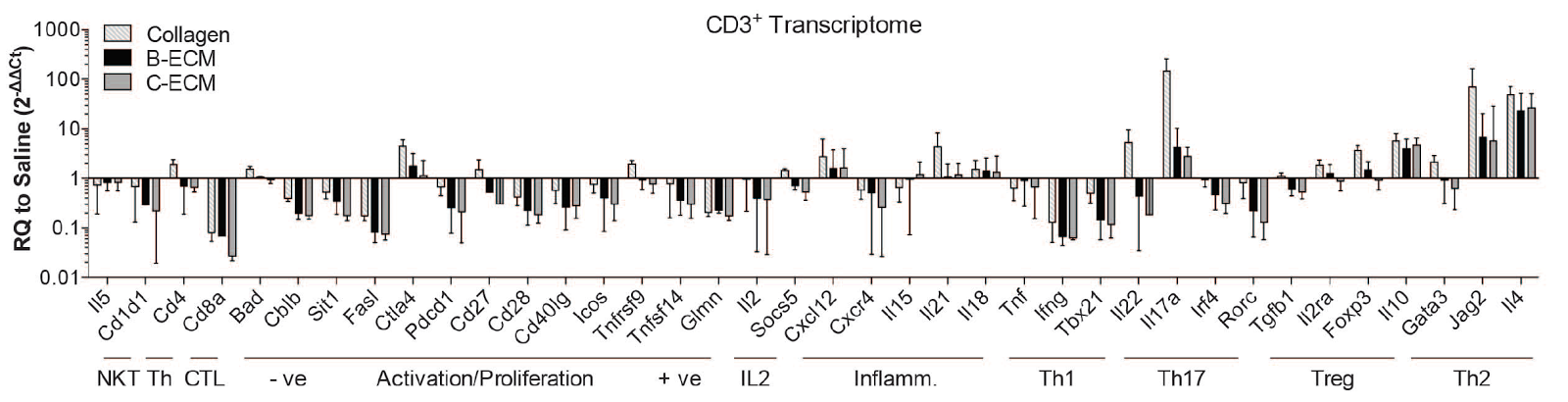
For this study the authors applied three different tissue-derived extracellular matrix (ECM) scaffolds to surgically-injured muscle tissue: (1) particulate collagen, (2) bone–derived tissue ECM scaffold (B-ECM), (3) cardiac muscle–derived tissue ECM scaffold (C-ECM). Gene expression profiling of sorted T cells harvested from muscle tissue 1 week post-injury showed up-regulation of IL-4, a canonical TH2 cytokine (also IL-17, but the authors did not discuss its significance).


Next, authors found that up-regulation IL-4 in injured tissue was abolished in RAG-KO mice that lack adaptive immune cells, indicating the role of adaptive TH2 cells in this process.


The role of TH2 cells in orchestrating type II immune environment was also shown by analysis of CD206+ myeloid cells (a mannose receptor and classical M2 marker) from injured tissue in RAG-KO, IL4ra−/− mice that cannot receive signals from IL-4, or Rictor−/− CD4+ T cells (T-Rictr−/−, TH2-deficient).


Finally, the authors showed that functionally-competent TH2 cells were necessary for wound healing and recovery of muscle functionality in response to cardiac muscle–derived tissue ECM scaffold.


In summary, this short study reveals a complex nature of type 2 immunity. Earlier studies showed that type 2 immunity is [in addition] involved in allergy/asthma, immune response to worms, thermoregulation / lean body metabolism. Now we can to this list tissue regeneration as well.

David Usharauli


Nanoparticle-caged antigens could treat allergen-sensitized host

The challenge with immune system-[driven] disorders is the fact that ordinarily such conditions are detected at the later stages when immune system had already developed self-perpetuating "memory circuit". Even now we know very little how to break such "memory circuit".

New study in PNAS suggested an experimental model that were able to tolerize already-sensitized host against allergen. The authors showed that biodegradable nanoparticles incorporating caged antigen, but not simple conjugates, could deliver both prophylactic and therapeutic treatment to allergen-prone host.

For this study the authors have used widely-accepted experimental sensitization protocol in mice to induce TH2-driven allergy to ovalbumin  antigen (OVA). Next, they proceeded to test three different combination of  nanoparticles + ovalbumin: (1) OVA conjugated to polystyrene nanoparticles (Ag-PS), (2) OVA conjugated to biodegradable poly(lactide-co-glycolide) nanoparticles (Ag-PLG) and (3) OVA caged within biodegradable poly(lactide-co-glycolide) nanoparticles [PLG(Ag)].

First, the authors found that all three nanoparticle combinations displayed potent prophylactic action against allergen when delivered before allergen sensitization (Ag-PLG is shown here).


However, when applied to already allergen-sensitized host, polystyrene nanoparticles induced severe allergic reaction. In contrast, application of Ag-PLG nanoparticles did not induce allergic response in sensitized hosts and even reduced TH2 cytokines. However, Ag-PLG nanoparticles could not inhibit lung eosinophilia.


Finally, the authors showed that application of PLG nanoparticles with caged OVA antigen could both prophylactically and therapeutically inhibit TH2-driven allergic response.


In summary, this study showed that nanoparticles incorporating antigens (Ag caging) avoids detection by allergen-specific immune effector molecules (IgE) and instead drives tolerance to allergen.      

David Usharauli

Saturday, April 2, 2016

TYRO3-PROS1 axis is a novel inhibitory circuit for type II immunity

This week Science published very simple and concise study showing that in mice DC-specific TYRO3 [TAM] receptor tyrosine kinase, and TH2 cell-specific TAM receptor agonist PROS1, represent novel inhibitory circuit dampening type II immunity (allergy, asthma, atopic dermatitis).

The senior author for this study, Carla V. Rothlin (department of immunobiology, School of Medicine, Yale University) is a shareholder of Kolltan Pharmaceuticals, so we may see some of these data going into biotech drug design. 

Using a house dust mite (HDM) model of allergic airway inflammation, the authors showed that Tyro3–/– mice showed exaggerated allergic (TH2) response.


Next, the authors showed that PDL2+ CD11c+ DCs expressed Tyro3 and that Tyro3–/– PDL2+ DCs were the main drivers of exaggerated TH2 cell response.


Finally, mice lacking CD4 T cell-specific PROS1 expression (Tyro3 agonist ligand) displayed similar exaggerated TH2 cell response to the helminth N. brasiliensis ( TH2 activator).


In summary, this study revealed that Tyro3-PROS1 axis represents novel inhibitory circuit specifically involved in regulating type II immune response (but not in TH1 or TH17 responses) and it could be targeted therapeutically (though it is not clear whether Tyro3-PROS1 axis also functions in humans. Limited data about human cells provided by the authors in the article were not conclusive).

David Usharauli

Monday, October 19, 2015

Food allergies caused by mast cells with a serial number 9

Allergies are complex immune responses. Whether allergic reaction have any "protective" function or represent a purely pathological reaction is still debated. Classical form of allergy is IgE mediated and require IL-4 and Th2 cells. However, the list of effector molecules and cells responsible for various forms of allergic reactions are continuously expanding.

For example, in a recent paper in Immunity the authors showed that certain mouse models of food allergy were driven by mucosal mast cells secreting high level of IL-9.

This is quite messy paper with lots of figures. In fact, it was under review for one year [and it shows by its lack of harmonized relationship between figures]. 

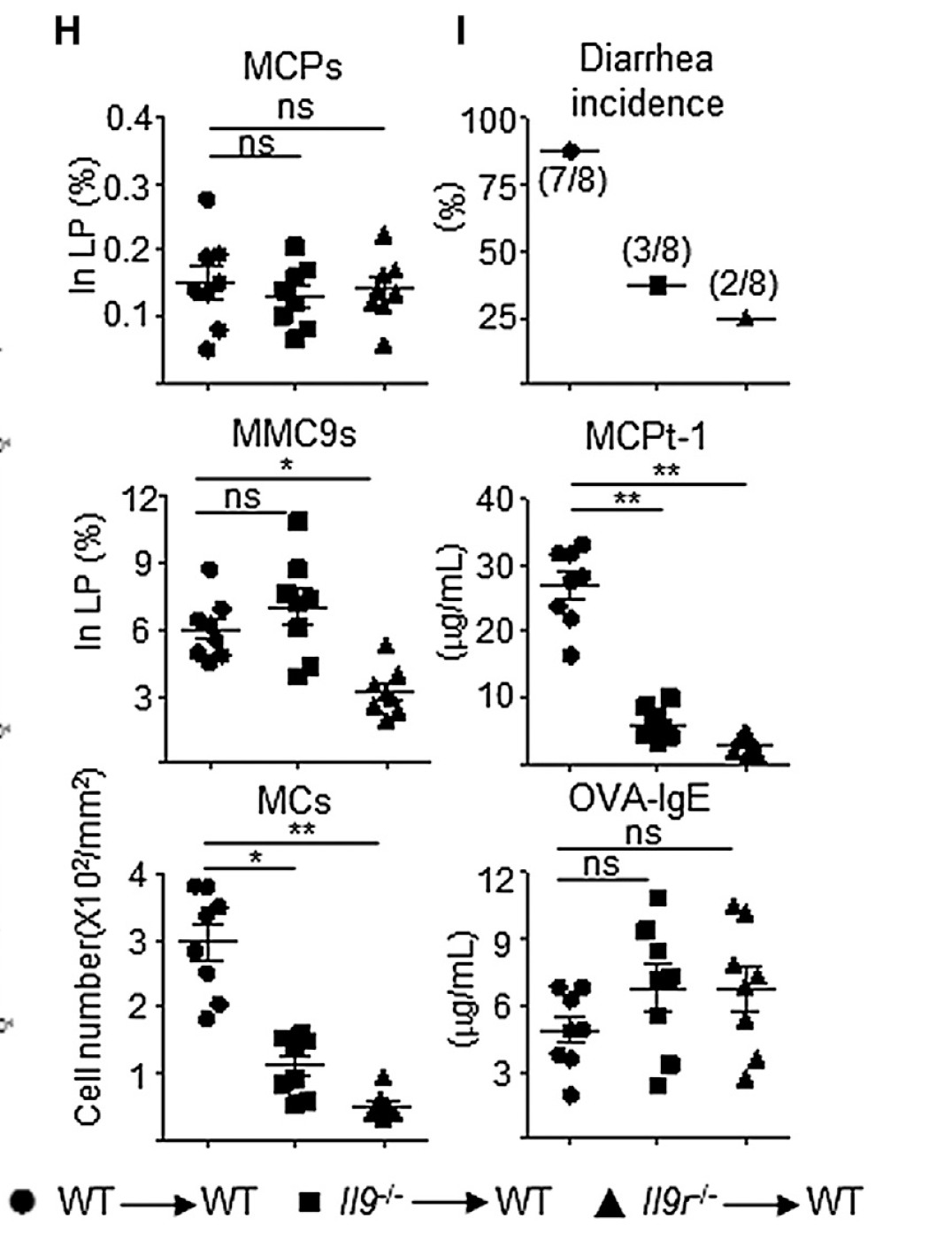
Initially, using mouse model of food sensitization [intra-gastric antigen gavage], the authors showed that allergic reactions (e.g. diarrhea) to antigen in susceptible mouse strains correlated with the number of GI mast cells, not serum IgE. Moreover, such correlation was highly significant for IL-9 producing lamina propria Lin-/- population in susceptible mouse strains [since not every mouse strain develop allergic response in this setting].


Further investigation with IL-4eGFP reporter mice revealed that this IL-9 producing Lin-/- population belonged to mast cell lineage, rather than innate lymphoid cell type 2 (that express IL-25 cytokine receptor IL-17RB).


Next, the authors showed that induction of IL-9+ mast cells (MMC9) required IL-4, STAT6 and T cells.

Finally, using BM chimera experiments the authors showed that while active signaling through IL-9 was dispensable for MMC9 induction, it was required to produce allergic phenotype.


In summary, this study suggests that GI tissue associated mast cell secreting high levels of IL-9 play a role in allergic response to sensitized antigens. The development of this MMC9 requires signaling via IL-4, STAT6 and T cells, implying typical Th2-driven immune response. It is possible [but not formally tested in this study] that therapeutic targeting of IL-9 pathway may benefit patients suffering from GI tract allergies to food.

David Usharauli

Wednesday, September 2, 2015

Adaptive Th2 cells can double as innate cells during allergy and helminth infection

Antigen specificity is a dominant feature of adaptive immune system. However, on occasions, fully differentiated effector T cells do show TCR-independent responsiveness to cytokines. Whether this is a good or bad thing is not easy to tell. 


For this study the authors had used a dual-reporter mouse model, called 4C13R, where both cytokine IL-4 and IL-13 are genetically labeled. Initially, the authors showed that adoptively transferred in vitro differentiated Th2 OT-II transgenic T cells, on 4C13R background, could secrete IL-13 (but not IL-4) in response to cytokine IL-33 (in combination with STAT5 activator IL-7 or TSLP).


Similarly, the authors observed TCR-independent IL-13 secretion by in vivo differentiated Th2 OT-II 4C13R cells to a Papain challenge (Papain is a protease and has been shown to induce type II immune response).


This TCR-independent secretion of IL-13 by differentiated Th2 cells was driven by IL-33.


Since type 2 innate lymphoid cells (ILC2) are known to respond to IL-33, the authors analyzed secretion of IL-13 by both Th2 and ILC cells after Papain challenge (here, mice were initially exposed to N. brasiliensis, a type II activator helminth). Both population could respond to Papain by secreting IL-13 (but not IL-4).


Similar results were obtained with another allergen, house dust mite extract (HDM).


Further experiments with RAG2-IL-2Rγ DKO hosts, which lack endogenous T and ILC2 cells, revealed that adoptive transfer of in vitro differentiated Th2 cells was sufficient to induce eosinophilia in lung tissue upon HDM exposure (allergen exposure).


The authors reasoned that in physiological situations initial antigenic priming would increase the number of Th2 cells to the level comparable to that of ILC2 and this would play a significant role in host protection or response to type II irritants (worm or allergen). Indeed, the authors showed that Th2 cells developed after first helminth infection could provide partial host protection to a second helminth infection, even in absence of ILC2 cells (in RORα bone marrow chimera).


In summary, these results suggest that adaptive immune cells can take the function of innate cells when necessary. Here, IL-13 appears to be a dominant cytokine that drives type II immune effector function (in 1990s ad early 2000s, the prevalent hypothesis positioned IL-4 in the center of type II immune effector response).

Such TCR-independent responsiveness has important implications for treatments of type II immune disorders such as allergy or dermatitis. For example, antigen (TCR ligand) desensitization protocol for allergy treatment may not provide full protection against allergic reaction due to IL-13 secretion (since it can be secreted independent of TCR signaling). On the other hand, blockade of IL-13 and IL-33 signaling may represent clinically relevant therapy (alone or in combination with antigen desensitization).  

David Usharauli
   

Thursday, August 20, 2015

Two distinct, mutually exclusive immune signatures, TH2 and TH17, determine therapy responsiveness in asthma

Asthma is a chronic condition manifested in episodes of airway hypersensitivity (inflammation, smooth muscle constriction) to innocuous signals that ordinarily would cause no tissue response in average individual. Eventually this chronic state leads to tissue remodeling and reduction of oxygen-rich air available for lung. 

Classical, allergic asthma episodes are driven by type 2 (TH2) immune response dominated by IL-4 and IL-13. However, more recently another category of asthma characterized by TH17 signature has been described. It appears that TH17 signature asthma may be more resistant to current asthma therapy.

The new study in Science Translational Medicine provided additional support for asthma stratification based on immune signature. This Genentech study showed that asthma immune profile can be stratified into mutually exclusive, non-overlapping TH2high and TH17high signatures.

This is a short paper. Basically, the authors analyzed airway gene signature from 51 asthma patients. They found that asthma patients' immune signature fall in 2 categories: either TH2high or TH17high. There is additional double negative category but its immune signature is not known.


Interestingly, both TH2high and TH17high signatures were associated with eosinophil infiltration.


Since current asthma therapies mainly target TH2 signature, the authors tested the outcome of α-IL-4/IL-13 blockade on animal asthma model (house dust mite antigen sensitization). As expected, dual blockade of TH2 cytokines significantly reduced airway inflammation.


However, TH2 cytokine blockade also induced TH17 signature, as would have been expected from in vitro studies (though it is not entirely clear from the data if this shift to TH17 pathway induced any clinically-relevant airway inflammation here).


Finally, the authors showed that blockade of both TH2 and TH17 pathways may be necessary to avoid inverse increase in TH2-driven airway hypersensitivity during anti-IL-17 therapy.


In summary, this study suggests that clinical trial design for α-IL-17 target therapy in asthma patients may need modification based on this findings. For example, α-IL-17 therapy alone may be not sufficient or that eosinophil signature could not be used as a exclusion factor for α-IL-17 therapy.

David Usharauli